
Saturday, August 4, 2012
Tuesday, July 31, 2012
Games vs. Play
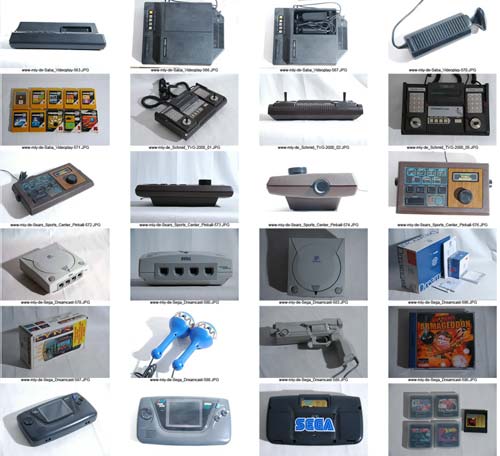 |
| Game Specific Hardware |
Games now influence the whole of interactive media. At first games encouraged the development of a wide range hardware to support them. Then it encouraged a wide range of game controllers to be able to play them. Currently, it as led to motion control like the Kinect. Games have also influenced the use of interactive media in the realm of what was once e-learning, and offered serious games. Games are even going so far as to influence perspectives on pedagogy. They have even inspired gamification, which uses game principles as a means to revitalizing interactive systems, new technology, marketing and creating a higher rate of user motivation.
 |
| Making Serious Games |
 |
| Dice for Change [3] |
 |
| Playing with Pigs [2] |
[1] Man, Play and Games

[2] Playing with Pigs
[3] Dice for Change
[4] Play: How it Shapes the Brain, Opens the Imagination, and Invigorates the Soul

[5] 8KindsOfFun

Monday, May 21, 2012
Using Narratives as Game and Play Mechanics
I typically hold to a 'stories are not games' and 'games are not stories' rhetoric, however there is a grey area in the discussion of narration and game design. Recently
I was reading some blogs and articles about games and narratives. I was a bit disappointed because if we analyzed
these current discussions, I think that we would find very little progress
in the general knowledge concerning narratives in video games and what this means to the game’s
design. The typical discourse ranges from narratives are essential to video games, video games are narratives, and video games don’t need narratives. The
purpose of this post is to examine the narrative from a game design
perspective. In this post I specifically focus on two types of narrative game and play mechanics.

For
the most part narratives and games are treated as two separate entities in game design theory, which is not strange because both games and narratives
are both trans-medial. Meaning that they can be experienced in various forms of
media. For narratives this means: books, films, verbal storytelling, etc. And
for games this means: physical activity, computers, board and card games, etc. Typically
a game's narrative has no relationship to the game's play expect for attempting to
give the overall game-play experience more depth. For example, if you were to
skip through the narrative of these games the game could still be completed. Often these game-play experiences feel disjointed which is caused by the conflict between game and narrative. One such pitfall occurs when narrative takes away the control from the player, which is the essential aspect of all games (e.g. even if it is only rolling dice for a random result), especially when the narrative takes away interesting choices from the player. Furthermore, cut-scenes should be a moment for the narrative to elaborate on changes due to the player’s actions or build the context in which the game action is taking place. Lastly, I think that one of biggest pitfalls is when the narrative animation is more exciting than the game action...
Only if the player could find this kind of action in-game...
 |
| Zork is an old school text adventure game |
The narrative game and play mechanic challenges the player's ability to comprehend
the narrative. Unlike traditional narratives where the reader/viewer is never asked if
he/she is able to follow the story line to continue. The play mechanics can be adjusted
to make a narrative game mechanic more challenging by time pressure, providing goals
(e.g. dilemmas, changing the narrative outcome), and frequency in which the
player is confronted with narrative (e.g. critical choices) choices.
 |
| Making decisions in Mass Effect |
The other kind of game mechanic that a narrative can be is a reward, and while this is not much of a surprise, narratives are most often used exactly for this reason (though i wonder how many designers or writers really understand it from this perspective). The play mechanic aspect of this game mechanic can be adjusted to offer the narrative in various forms of reward schedules (e.g. random, timed, paced, etc.) and provide a context for the ultimate game goal (e.g. finishing the game). In other words a narrative can be used exactly how other rewards are designed into a game. I believe the reward of a narrative is especially strong if it is able to provide the proper cliffhangers at each point it is introduced.
I am
sure that there are more ways in which elements of a narrative can become game
mechanics. My conclusion is that designers and writers could become more aware
of this phenomenon and take advantage of how games and narrative are blended. Furthermore,
I hope this can help solve the conflict between designers and writers who see
video games as either narrative or game-play.
Subscribe to:
Posts (Atom)